
Seeing Life in Pink: Dancing Through Piaf’s Legacy
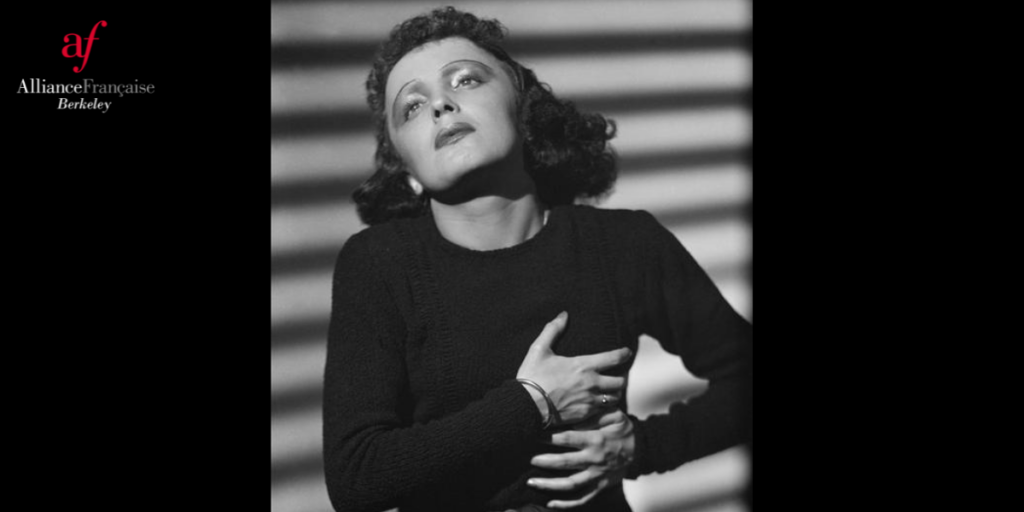
This year, the Alliance Française de Berkeley invites you to celebrate Bastille Day by dancing to new interpretations of La Vie en rose, the song that helped make Édith Piaf a global icon. The perfect opportunity to look back at the extraordinary life and career of France’s most beloved chanteuse.
Édith Underneath Paris Skies
Born on December 19, 1915, on the streets of Paris, Édith Piaf, née Giovanna Gassion, experienced an unusual childhood. With a father who was a circus contortionist and a mother who was a street singer, Édith was sent to live with her paternal grandmother in Normandy for several years before returning to her parents at age 7.
It was then that young Édith began accompanying her father while he performed on the streets of Paris. In 1935, she was scouted by the manager of Le Gerny's, a cabaret located on the Champs-Élysées. Intending to make her a cabaret singer, the manager gave Édith her stage name, “La Môme Piaf” (the Little Sparrow), because of her tiny stature and expressive voice.
Love Inspires Classics
During her years performing in Parisian cabarets, Édith became friends with composer and pianist Marguerite Monnot. Together, in 1945, they composed the famous song La Vie en rose, inspired by Édith’s newfound happiness and her romantic life at the time. The song was first recorded by Marianne Michel, a fellow singer and friend, and became an instant success. Édith later recorded her own version, which became the timeless classic we know and love today.
Another classic song from Édith is L'Hymne à l'amour. Written in 1950 as an homage to her love story with French boxer Marcel Cerdan, it became a declaration of her love for him following the tragic plane accident that took his life the year before. In the following years, she released several other songs and albums, including Padam... Padam... (1951) and La Foule (1957). Due to deteriorating health and addiction problems, Édith planned to stop performing in 1960.
A Life Without Regrets
However, one song led her to deviate from her plans: Non, je ne regrette rien, composed by Charles Dumont during a period of financial hardship, with lyrics by Michel Vaucaire. They insisted on presenting the song to Édith Piaf, who found it magnificent and deeply moving, reflecting her own feelings at the time. It was quickly recorded and released in December 1960, becoming another French classic. Édith Piaf resumed performing and continued to sing until her death in 1963.
Join us for Piaf & Pas de Danse: A Bastille Day Celebration!
By Raniya Jin