Argot: From Secrets to the Streets
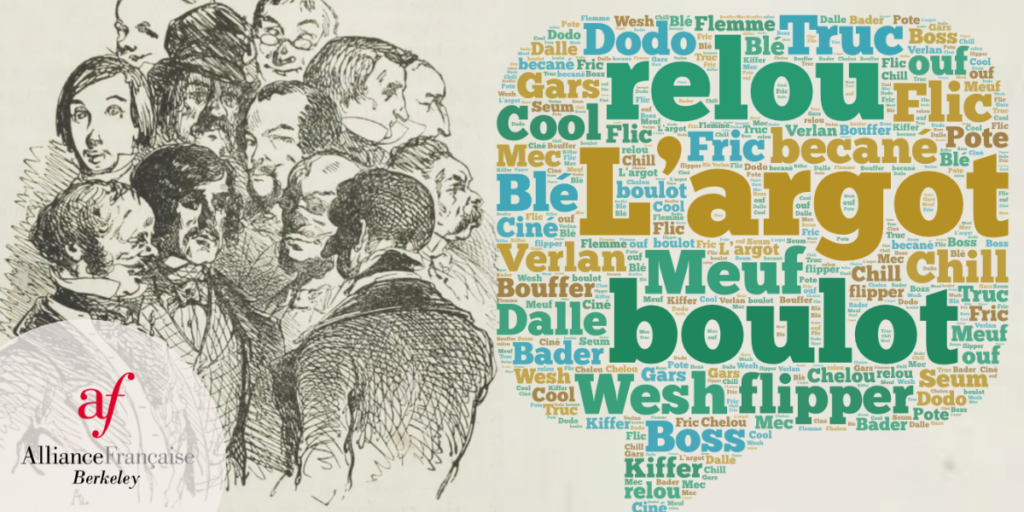
As French learners, we always notice a difference between what is taught in a textbook and what we hear in conversations between friends from francophone countries. This gap is where l’argot emerges.
Now, what is l’argot?
A quick search on the Internet leads to a formal definition from Le Robert dictionary, which defines l’argot as the “vocabulary or a lexicon belonging to a specific group of people that sometimes makes its way into the common language.” In today’s world, it can simply be thought of as slang.
But where does this idea come from?
While the origins of the word itself are widely contested, it is generally understood that l’argot was originally used to describe the language of criminals or beggars, allowing them to communicate without being understood by others. It was also a way to talk about taboo topics, whether religious, political, or sexual, in an indirect manner.
In its modern use, l’argot often consists of outdated slang (or jargon) abandoned by the original group that used it, losing its “secretive” aspect. It also serves as an important identity function, particularly for the people excluded from the dominant social group and its language.
Today, l’argot is often associated with the French banlieues, where many expressions originate before entering everyday vocabulary and, in some cases, the dictionary. In this sense, it is very much “le parler des jeunes” (language of the youth).
The Language of Youth Today
In French, there are several ways in which argot appears. Two prominent ones are verlan and “borrowed” slang.
The word verlan is itself a verlan of the word l’envers, meaning “reverse,” which hints at how it is formed. This type of slang first appeared in the 19th century, used by criminals. Today, it has been popularized by second-generation immigrants in the French suburbs after World War II, and is prevalent in the French hip-hop culture. Verlan is formed by reversing the order of syllables in the word. Some examples:
- C’est ouf = C’est fou (“That’s crazy”): ouf is phonetically the reverse of fou, like saying the word backward.
- Meuf = Femme (fem/me → me/fem → meuf)
- A famous francophone singer, Stromae: his stage name comes from taking “maestro,” split by its syllables (“mae” and “stro”), and reversed → “stro” + “mae” = “Stromae”
The other type of slang comes from borrowing words from another language, such as Arabic and English. This is largely due to immigration and Western pop culture. Some examples:
- Kiffer = aimer = “to like,” comes from North African Arabic “kif”, synonymous with a feeling of pleasure, associated with tobacco and alcohol.
- Wesh (also from Arabic): there’s no actual English equivalent to this. It’s used based on vibes, depending on the context or the speaker’s tone. It can be thought of as “what’s up,” or as a filler word, or as a “mood word.”
- From English: c’est cool, le boss
So, the next time you overhear a conversation that sounds nothing like the examples in a textbook, don’t worry. What sounds like a secret code today might soon become part of everyday French and maybe even part of your own vocabulary.
By Raniya Jin